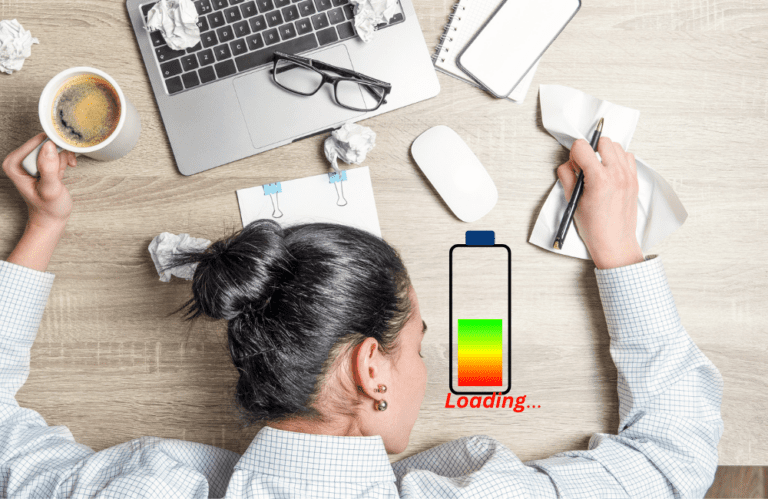
You’ve made a decision. No doubt at some point in your life, you’ve had to make big decisions. But then, within moments, your brain starts the familiar spiral: “What if I’m wrong? What if there’s a better option? What if I regret this?” Before you know it, you’re back to square one, stuck in the exhausting loop of second-guessing yourself.
If this sounds familiar, you’re experiencing something millions of ADHD adults face daily. If like me, you have that inner voice asking “why am I so indecisive?” It’s not asking this question to highlight what is wrong with us. It’s highlighting how your ADHD brain processes decisions in ways that often feel unproductive.
Why ADHD Brains Struggle with Decision-Making
Executive Dysfunction and Decision Fatigue in ADHD
Your ADHD brain struggles when it comes to decision-making. In fact, it’s working overtime. Research from the National Institute of Mental Health shows that when you’re trying to make a choice, your brain needs to hold multiple pieces of information, weigh pros and cons, and predict outcomes.
For ADHD brains, this process requires significantly more mental energy. As a result, you hit decision fatigue faster than neurotypical people, making even simple choices feel overwhelming.
The “Newness” Factor: Why ADHD Brains Crave Options
Another struggle for ADHD brains is that it thrives on novelty and stimulation. Always seeking new and exciting things or opportunities becomes a challenge when making decisions because every unexplored option feels exciting and full of potential. Committing to one path can feel like you’re missing out on all the other possibilities, creating what psychologists call ADHD choice paralysis.
Signs You’re Stuck in ADHD Decision Paralysis
ADHD decision paralysis looks different for everyone, but common signs include:
- Spending hours researching options without getting closer to a choice
- Asking everyone for their opinion, then feeling more confused
- Making a decision and immediately wanting to change it
- Avoiding decisions entirely and hoping they’ll resolve themselves
- Feeling physically exhausted after trying to make choices
The key insight here is that indecision isn’t a willpower problem. It’s often a clarity problem. When your initial decision doesn’t align with what you truly need or want, your brain keeps searching for the “right” answer.
Strategy to Keep Decision Paralysis at Bay
You now understand your brain’s patterns, its quirks, and how to leverage this insight to navigate indecisive moments more effectively. Below are 5 strategies you help stop the spiral.
Strategy 1: Anchor Your Decisions in Core Values (Your ADHD Decision Filter)
The Values Factor Method for ADHD Brains
One of the most powerful books I’ve read this year is The Values Factor by Dr. John Demartini. Demartini explains how identifying your core values creates a decision-making filter that cuts through the noise of endless options.
For ADHD brains constantly bombarded with possibilities, values act like a GPS system. Instead of getting lost in all the potential routes, you have clear criteria for which path aligns with your destination.
Quick Values Assessment Questions
Before your next decision, ask yourself:
- What is my biggest priority right now? (Mental health, financial stability, personal growth, family time)
- Does this decision move me closer to or further from that priority?
- If I imagine myself five years from now, which choice would I thank myself for making?
For example, if your mental health is your top priority, choosing the less stressful job option makes sense, even if it pays slightly less. When decisions align with your values, your brain stops second-guessing because you know you’re moving in the right direction.
Strategy 2: Set Time-Bound Decision Checkpoints (The 30-Day Rule)
Why “Forever” Feels Overwhelming to ADHD Brains
One reason ADHD brains resist commitment is the fear of being stuck forever. The good news? You don’t have to stick with your decision forever. You just need to stick with it long enough to see if it works.
Creating Your Decision Checkpoint System
Set a specific timeframe for your decision, typically 30 days, and promise yourself you won’t second-guess or pivot until that time is up. Write this date down, put it in your calendar, or tell someone you trust.
This approach works because it removes the pressure of “forever” and gives you permission to focus on the present. When those familiar doubts creep in (and they will), remind yourself that you can reevaluate at your checkpoint date.
Using a planner designed for ADHD brains can help you track these checkpoints and build visual accountability for following through on your decisions.
Strategy 3: Build ADHD-Friendly Accountability Systems
Body Doubling for Decision Follow-Through
Accountability transforms good intentions into action. Share your decision with someone you trust and ask for their support in sticking with it for your designated timeframe.
Finding Your Decision Support Network
This doesn’t mean asking for advice (which often makes ADHD indecision worse). Instead, say something like: “I’ve decided to stick with this for 30 days, and I’d love your help staying on track.” Sometimes just knowing someone else is aware of your commitment provides the external structure ADHD brains need.
Consider finding an accountability partner, joining an ADHD support group, or working with a coach who understands how ADHD affects decision-making.
Strategy 4: Break Decisions into ADHD-Sized Steps
The Mini-Plan Method for Overwhelming Choices
Large decisions feel paralyzing partly because they seem so huge and permanent. The solution is breaking your choice into smaller, manageable actions.
Small Wins That Build Decision Confidence
Instead of thinking “I need to change my entire career,” focus on “What’s one thing I can do this week to explore this career path?”
If you’re working on financial decisions and find yourself stuck, understanding your money blocks can help clarify what’s really driving your indecision around money choices.
Each small action builds evidence that your decision is working, making it easier to continue down that path.
Strategy 5: Give Yourself Permission to Pivot (Reducing Decision Pressure)
The “Good Enough” Decision Mindset
Perfectionism fuels ADHD indecision,you’ve read this every post on this blog. You’re waiting for the “perfect” choice, but perfect rarely exists. Instead, aim for “good enough for now.”
When and How to Reassess Your Choices
Remember, you always have permission to change course later. This isn’t giving up or failing. It’s gathering information and adjusting based on what you learn.
Tell yourself: “I’ll reassess in 30 days. If this decision isn’t working, I’ll make a new one with more information than I have today.” This permission to pivot paradoxically makes it easier to commit to your current choice.
Your ADHD Decision-Making Action Plan
Daily Reflection Questions for Indecisive ADHD Brains
Use these questions to build your decision-making confidence:
- What’s my top priority right now?
- Does this decision align with that priority?
- How can I break this choice into smaller, manageable steps?
- Who can I ask for accountability or support?
- What’s my checkpoint date for reevaluating?
Building Long-Term Decision Confidence
Start small. Practice these strategies on low-stakes decisions first, like what to have for dinner or which movie to watch. As you build confidence with smaller choices, you’ll find larger decisions become more manageable.
Creating a calming sensory ritual before making big decisions can also help reduce overwhelm and access clearer thinking.
Moving Forward with Your ADHD Brain
Decision-making with ADHD looks different from neurotypical decision-making, and that’s okay. Your brain’s need for novelty, stimulation, and options isn’t a flaw to fix. It’s a feature to work with.
We need to create systems that help us move forward despite the doubt, build confidence through action, and remember that most decisions can be adjusted as we learn more.
Your indecisive moments don’t define you. Your ability to implement these strategies and keep moving forward does.
Start with one strategy that resonates most with you. You don’t need to transform your entire decision-making process overnight. Pick your approach, set your 30-day checkpoint, and begin building the decision-making confidence your ADHD brain deserves.
Disclaimer: This content is for informational purposes only and is not intended as medical advice. Always consult with healthcare professionals regarding ADHD symptoms and treatment options.