The Common Goal-Setting Traps
Every January, millions of us write long lists of resolutions. By February, most of those lists are buried under laundry, half-finished planners, and forgotten gym memberships.
Why? Because our brains can’t chase 15 priorities at once. Especially ADHD brains. BUT when you simplify the matter and focus on less goals, say just four major goals a year, one every 90 days, you give your brain exactly what it craves: clarity and momentum.
If you’re anything like me, indecisive, pulled in a hundred directions, and constantly chasing shiny objects, you probably fall into one of two traps:
- You’re unsure of what your goals should be, so you stall.
- Or you make vague, superficial goals like “lose 15 pounds” or “get out of debt,” without a clear plan behind them.

Honestly, I wasn’t sure how to create goals that felt meaningful and doable. I’d set intentions, but they never stuck.
That’s why I developed a simple five-step process for setting goals you’ll actually follow through on.
And if you’re here because you just purchased the Permission to Achieve Planner — this process will help you create the four goals you’ll carefully work toward over the next few months.
Step 1: Life Area Assessment–Where Do You Even Start?
Before you can set meaningful goals, you need to figure out which area of your life needs the most attention right now. Not eventually. Not someday. Right now.
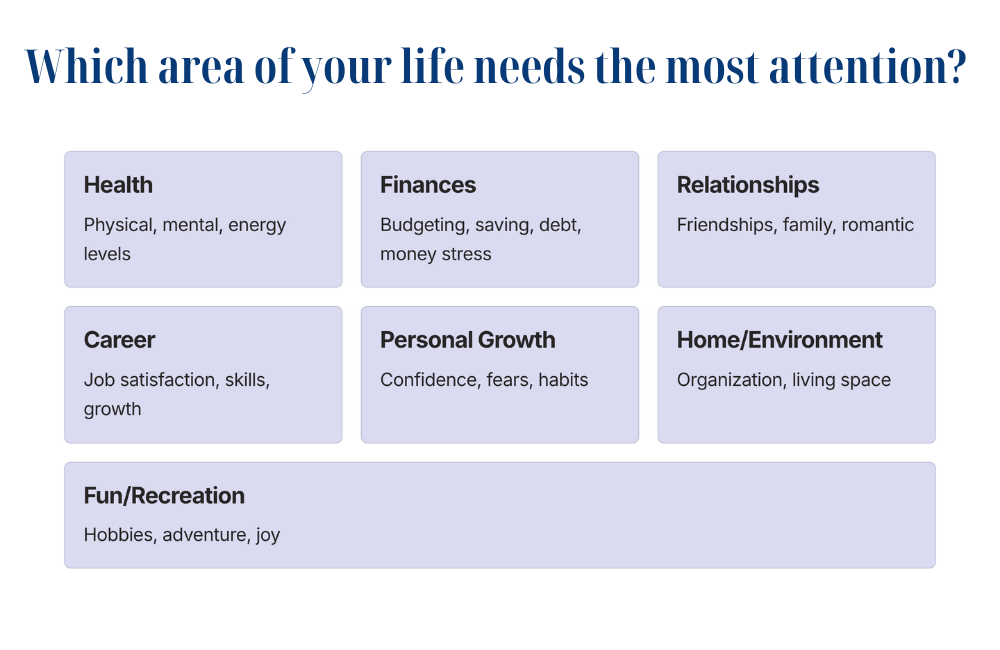
Your turn: Look at that list and honestly assess where you are right now. Don’t think about where you “should” be – where ARE you?
Step 2: The Priority Decision Framework
The hardest part isn’t writing the goal. It’s choosing which one to tackle first.
Now comes the hard part – choosing just ONE area to focus on first.
Here’s the framework I use:
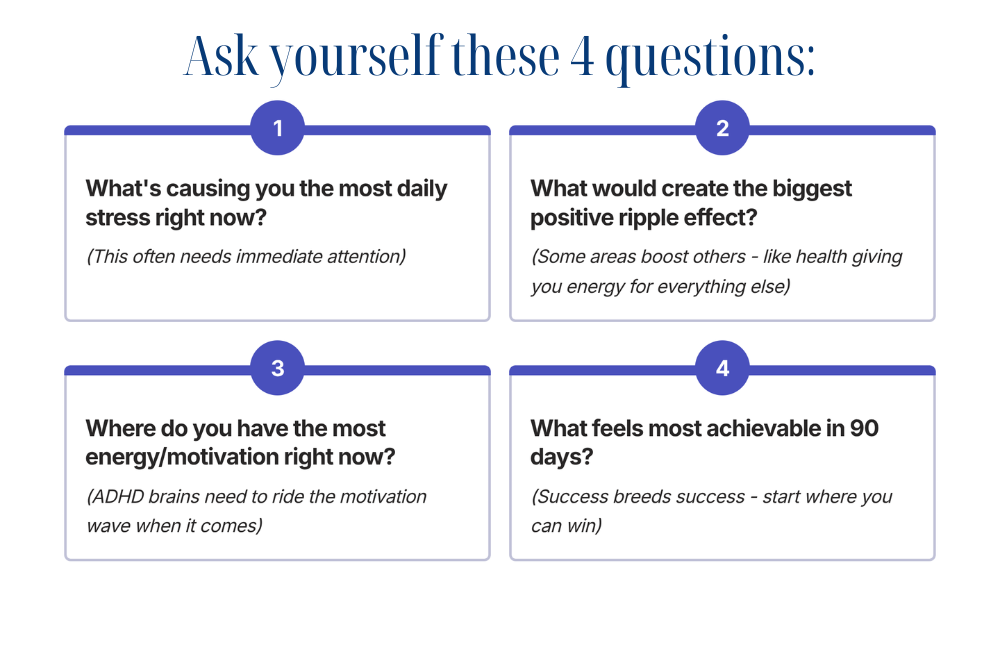
Real talk: There’s no “right” answer here. The best goal is the one you’ll actually work on consistently for 90 days.
Step 3: From Wish to SMART Goal
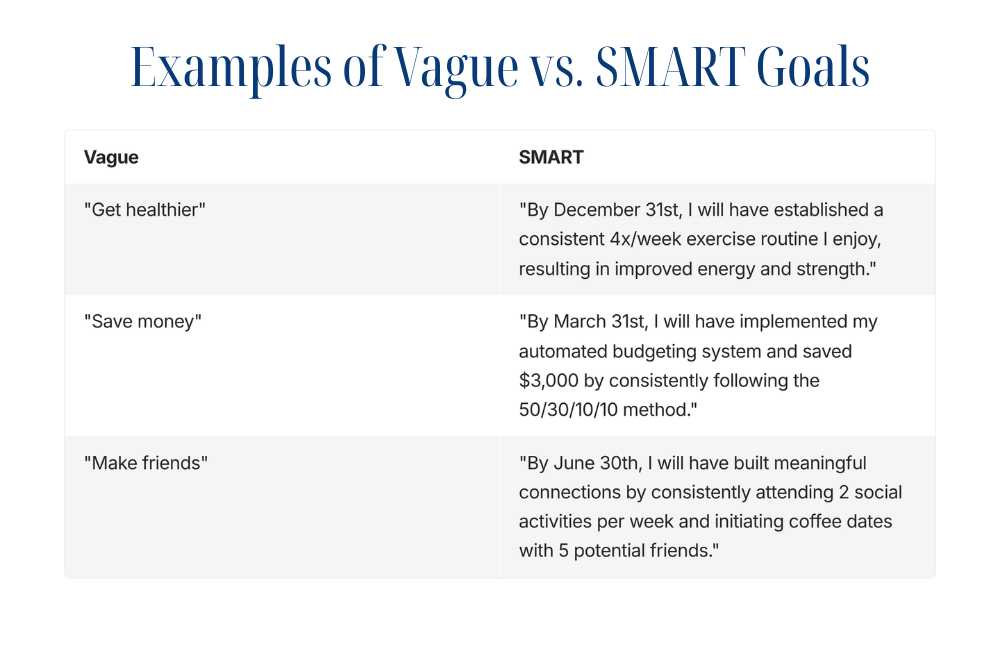
Okay, you’ve picked your focus area. Now we need to turn that vague “I want to get healthier” into something specific you can actually achieve. One way to do this is by creating SMART Goals, but we’ll need to tweak them to make them work for our ADHD brains.
SMART Method:
- Specific: Exactly what will you accomplish?
- Measurable: How will you track progress?
- Achievable: Is this realistic for your life right now?
- Relevant: Does this actually matter to you?
- Time-bound: Clear deadline (90 days from now)
Step 4: The 90-Day Breakdown
Here’s where your Permission To Achieve Planner really shines. We’re going to break your big goal into monthly milestones and weekly action steps.
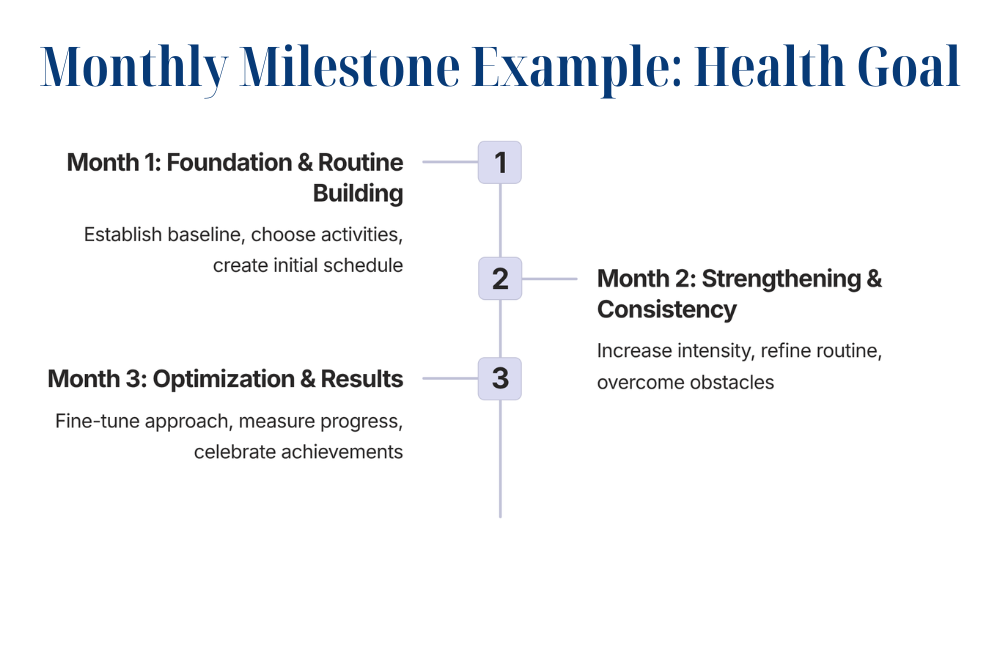
Monthly Milestones (3 total):
Think of these as mini-goals that build toward your big goal. Each month should have a clear focus.
Example – Health Goal:
- Month 1: Foundation & Routine Building
- Month 2: Strengthening & Consistency
- Month 3: Optimization & Results
Weekly Action Steps:
Each month gets 4-5 weekly focuses (depending on the month). These should be specific enough that you know exactly what to do each week.
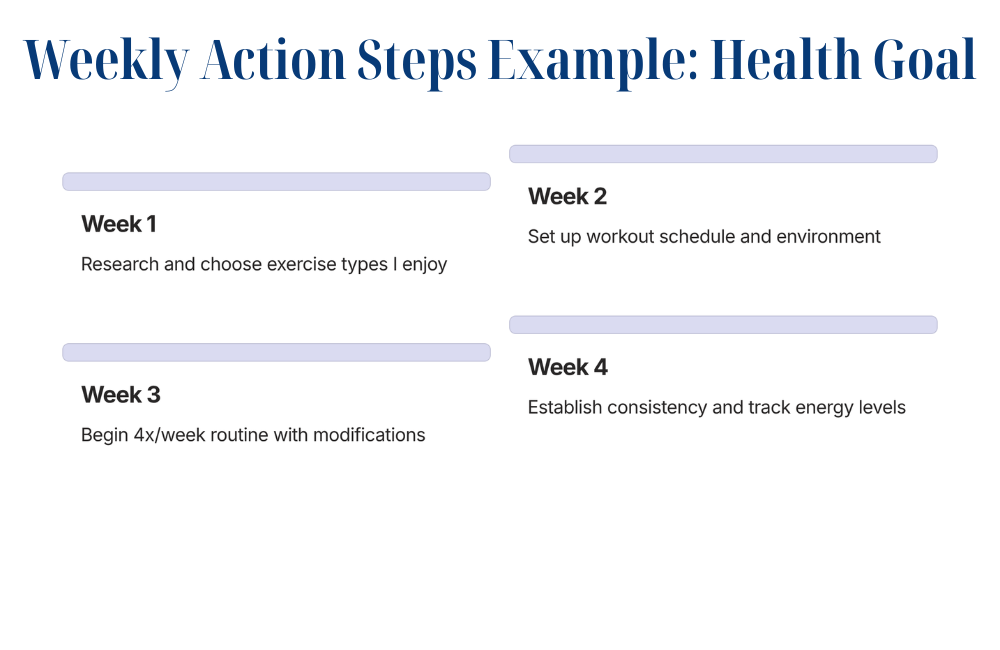
Example – Month 1 of Health Goal:
- Week 1: Research and choose exercise types I enjoy
- Week 2: Set up workout schedule and environment
- Week 3: Begin 4x/week routine with modifications
- Week 4: Establish consistency and track energy levels
Pro tip: Your weekly action steps go in the weekly planning section of your planner. This is how you connect your big goal to your daily life.
Download: 90-Day Breakdown Worksheet (template for milestones and weekly steps)
Step 5: The Secret to Not Dropping Everything Else
Now, here is the most important to remember about goal setting: You can’t focus intensely on everything, but you can’t ignore everything else either.
This is where I used to get stuck. I would think “If I’m focusing on health, I guess my finances will just have to fall apart for 3 months.” Wrong!
Enter: The Maintenance System
While you’re putting 70% of your goal energy into your major focus, the other 30% goes to maintaining the other important areas of your life.
How it works:
- Major Goal: Gets detailed planning, weekly action steps, daily attention
- Maintenance Areas: Get simple habits that prevent backsliding
Real Examples:
If your major goal is Health:
- Maintenance Finance: “Check account balance once per week”
- Maintenance Relationships: “Text one friend each week”
- Maintenance Career: “Spend 30 minutes on LinkedIn monthly”
If your major goal is Finances:
- Maintenance Health: “Walk 3 times per week minimum”
- Maintenance Relationships: “Plan one social activity monthly”
- Maintenance Personal Growth: “Read 15 minutes daily”
Step 6: Your Habit Tracker IS Your Maintenance System
Plot twist: You already have the perfect tool for maintenance in your planner – the habit tracker!
Those 3 monthly habits you can track? Use them for your maintenance areas.
Here’s how:
- Choose your major quarterly goal (gets most of your energy)
- Pick 3 simple maintenance habits for other life areas
- Track those 3 habits monthly in your planner
- Use your weekly Eisenhower Matrix to plan where everything fits
Example Setup:
- Major Goal: Financial system implementation (detailed weekly planning)
- Habit 1: Walk 3x/week (Health maintenance)
- Habit 2: Text friend weekly (Relationship maintenance)
- Habit 3: Read 15 min/day (Personal growth maintenance)
Pro tip: Keep the same 3 maintenance habits all month. Don’t change them weekly – that’s too much for your brain to track.
Download: Maintenance Habit Selection Guide (how to choose simple habits for each life area)
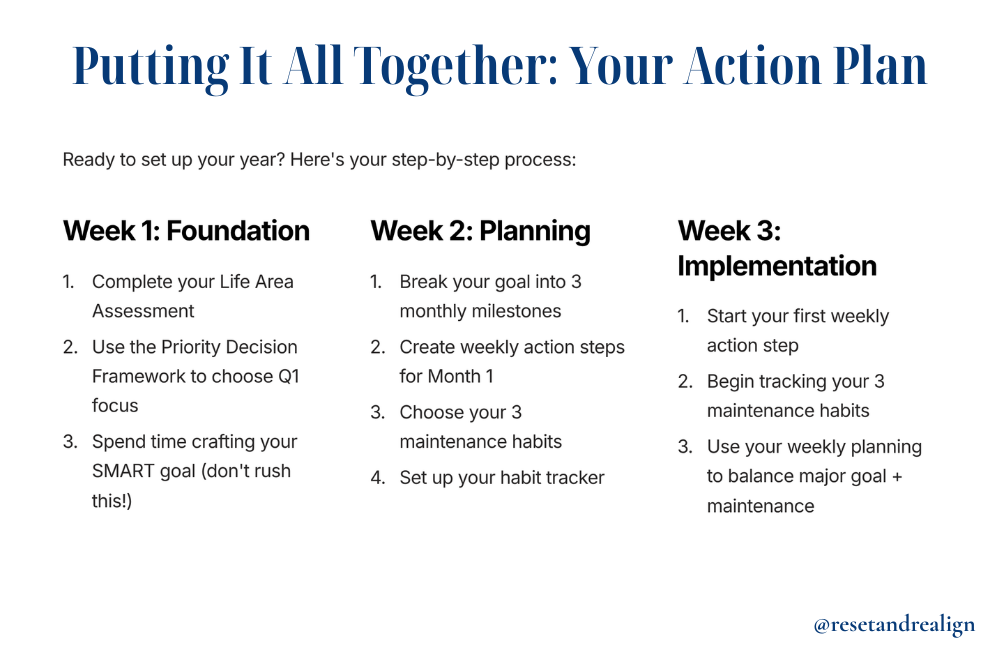
Quarterly Planning:
- Q1: Your first major goal + 3 maintenance habits
- Q2-Q4: Repeat this process, choosing new major goals while maintaining previous wins
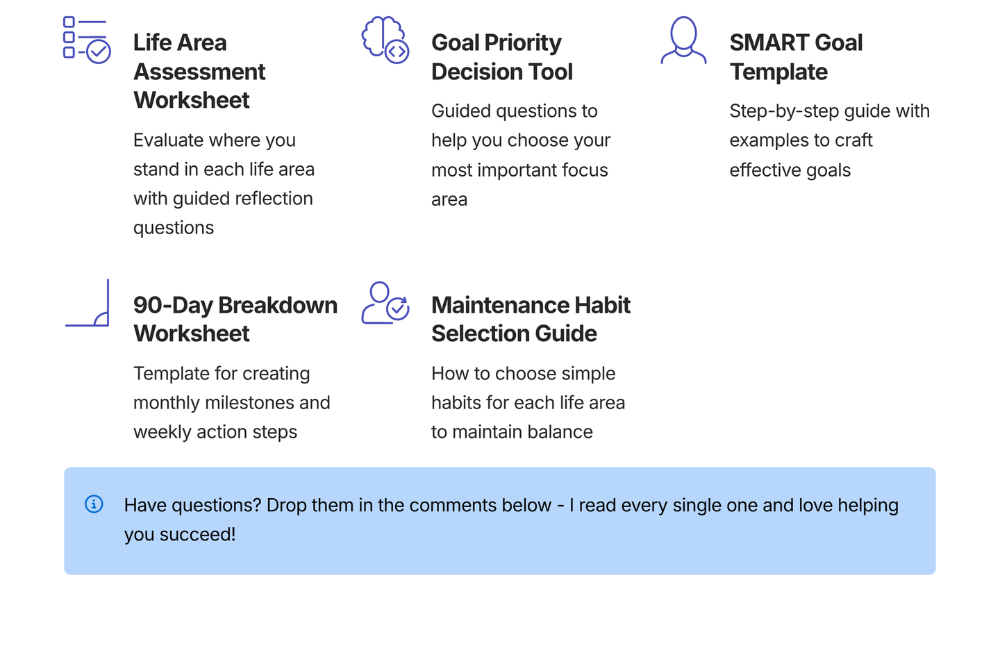
Download Your Complete Goal-Setting Toolkit:
Embracing Real Life While Achieving Your Goals
Listen, you’re going to have weeks where nothing goes according to plan. Your kid gets sick, work explodes, life happens. That’s being human.
The beauty of this system is that it’s designed for real life. Your major goal gives you clear direction, your maintenance habits keep you from backsliding, and your planner keeps it all organized.
Imagine yourself three months from now, not juggling 15 resolutions, but actually crossing off a real, meaningful goal. That’s the power of this system. Your planner isn’t just a notebook, it’s the bridge between intentions and results.
So download the toolkit, get your planner if you have not already done so, set your first 90-day goal, and let’s make this the year you actually follow through.